
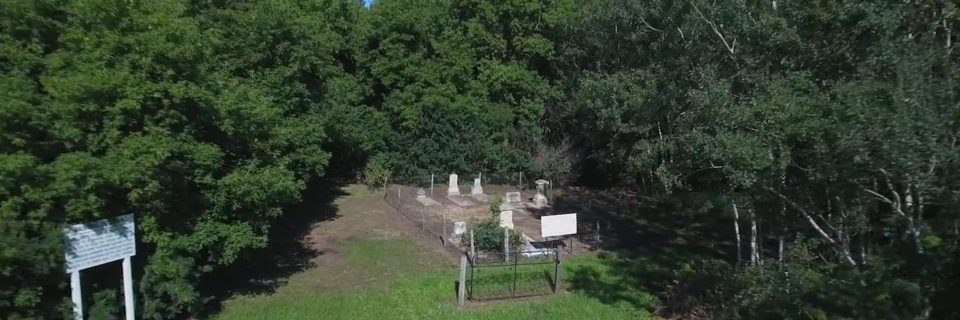
Site #03: Balmoral Cemetery
Established at the turn of the 20th century by the Congregational Church of Canada, Balmoral Cemetery serves as a quiet monument to the early British and Ontario settlers of the district. While it holds the remains of many local pioneers, it is most notably the final resting place of William Diehl (1850–1936), a man whose role in the closing days of the 1885 North-West Resistance remains a significant chapter in the story of Western Canada.
The Surrender of Louis Riel
William Diehl’s name is forever etched into history as one of the three scouts to whom Louis Riel surrendered on May 15, 1885. Following the Battle of Batoche, Riel had fled into the woods. According to accounts preserved in the Virtual Museum of Métis History and Culture, Diehl, along with fellow scouts Thomas Hourie and Robert Armstrong, encountered Riel near a northern coulee. Riel, reportedly carrying only a small book of prayers, surrendered to the three men on the condition that they protect him from the angry militia and deliver him directly to General Frederick Middleton. Diehl and his companions followed through, escorting Riel to the General’s camp and effectively ending the armed resistance.
A Life in the Riverlands
While his role in the 1885 Resistance is his most famous exploit, Diehl’s life after the conflict reflects the typical perseverance of the Riverlands settlers. As documented in the local history volume Bridging the Years: Era of Blaine Lake and District 1790-1980, Diehl settled in the Blaine Lake district long before the town itself was established, homesteading and witnessing the transformation of the region from a vast prairie used by the fur trade into a settled agricultural hub. His presence in the Balmoral district helped anchor the English-speaking community that lived alongside the burgeoning Doukhobor and French settlements.
The Congregational Legacy
The cemetery itself represents the religious diversity of the early 1900s. The Saskatchewan Archives Board land records note that the Balmoral district was largely populated by settlers of Ontario and British descent. The Congregational Church, which founded the cemetery, was known for its emphasis on local autonomy and community service—values that Diehl himself embodied as a long-standing member of the community. Today, the well-preserved headstones at Balmoral provide a genealogical record of the families who navigated the transition from the “frontier” era to the modern age.