
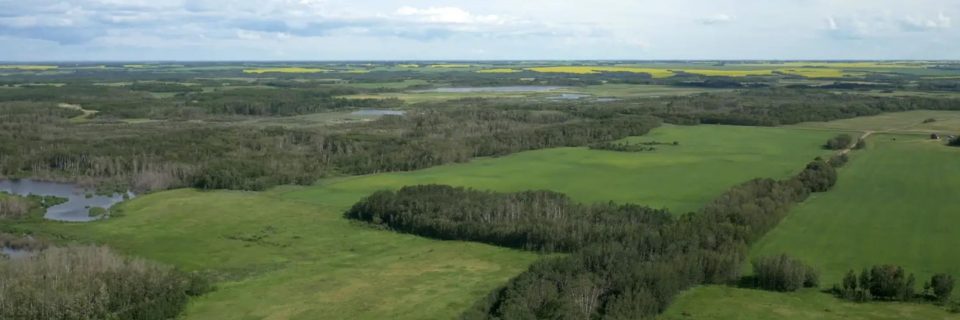
Site #13: Fort Carlton – Green Lake Trail (South)
Long before the highway system or the railway defined the Riverlands, the landscape was crisscrossed by ancient trails. The Fort Carlton – Green Lake Trail is the most storied of these, serving as a vital artery that connected the North Saskatchewan River to the fur-rich regions of the north and the trade hubs of the east and west.
Ancient Origins and Buffalo Paths
The trail’s history stretches back into prehistory. According to archaeological surveys cited by the Royal Saskatchewan Museum, many sections of the trail began as Indigenous pathways following the seasonal migration of the great buffalo herds. These animals naturally sought out the easiest terrain through the rolling parkland, carving deep ruts into the prairie sod that would eventually be adopted by human travelers. In the late 1700s, explorers and fur traders recognized the strategic value of these paths, incorporating them into a massive overland network that linked Fort Garry (Winnipeg) to Fort Edmonton.
The Snake Plain Trail
Known locally as the “Snake Plain Trail,” this specific stretch winds northwest through the heart of the historic parkland. As documented in the Hudson’s Bay Company Archives, this section was crucial for transporting supplies from Fort Carlton to the northern outposts at Green Lake and beyond. It was a rigorous route that required travelers to navigate around numerous sloughs and through thick stands of aspen. By the mid-1800s, the trail was alive with the sound of “prairie screech”—the high-pitched wail of ungreased wooden axles on Red River Carts—as massive brigades of Métis traders moved freight across the plains.
A Scenic Link to the Past
The trail’s importance declined with the arrival of steamboats and the completion of the Canadian Pacific Railway, which shifted the primary trade routes further south. However, the physical imprint of the trail remains. As noted in the local history book Bridging the Years: Era of Blaine Lake and District 1790-1980, the modern drive from Carlton Crossing to the Town of Leask follows much of this original path. Traveling this route today offers a glimpse of the countryside as it appeared to the fur traders and early settlers.